From Closing the Books to Driving the Business

Repositioning Healthcare Finance as a Strategic Partner
In recent BRG assessments of healthcare providers, finance leaders often were surprised to learn that transactional and waste activity consumed 60 to 80 percent of their finance team’s time—leaving little capacity for the strategic analysis organizations now urgently need. That gap is becoming harder to ignore.
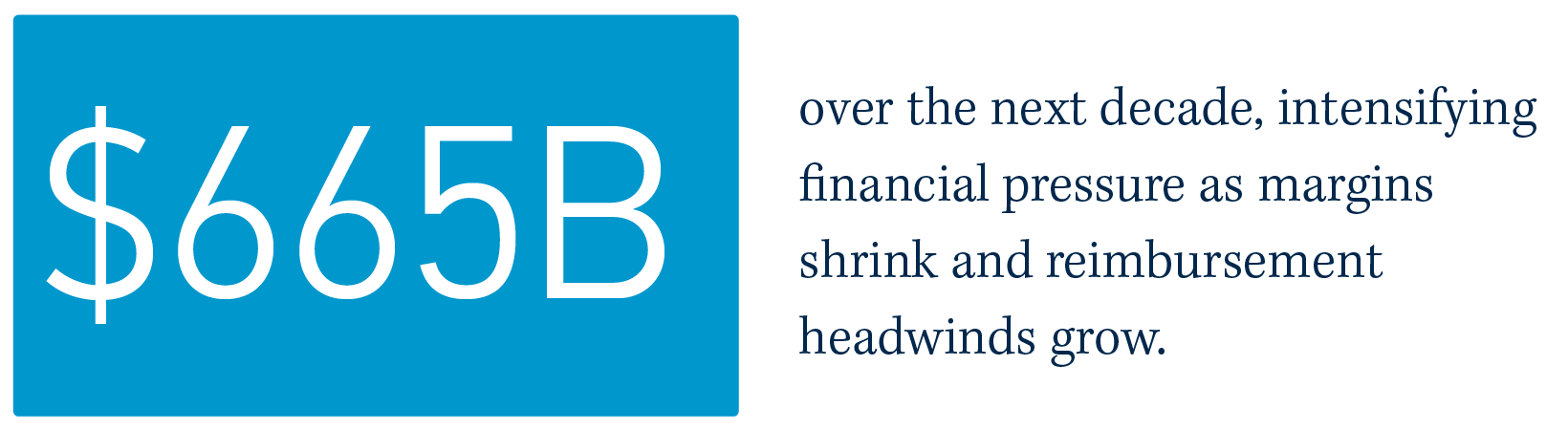
Recent policy changes could reduce US hospital funding by as much as $665 billion over the next decade, intensifying financial pressure as margins shrink and reimbursement headwinds grow.
 At the same time, hospital and health system merger and acquisition (M&A) activity reached a six-year high in early 2026, driving integration complexity that finance teams must increasingly support. In this environment, finance can no longer afford to operate as a retrospective reporting function—it must become a true strategic partner in care management, cost control, and revenue optimization.
The obstacle is visibility. Most finance leaders lack a clear, evidence-based view of how their teams actually spend their time, where bottlenecks and rework concentrate, and which activities quietly consume the capacity needed for higher-value work. In this article, we outline a practical approach—diagnose, redesign, sustain—for closing that gap and repositioning finance as a value-added engine for the enterprise.
What “Value-Added” Work Looks Like in Healthcare Finance
By value-added, we mean finance work that directly informs operational, clinical, or strategic decisions: service-line economics, contract and payer performance, productivity and utilization analytics, capital deployment, and M&A integration support. By contrast, low-performing finance organizations—based on BRG’s experience and supporting analyses by HFMA, the Advisory Board, and others—routinely spend 60 to 80 percent of total finance capacity on transactional and waste activity:
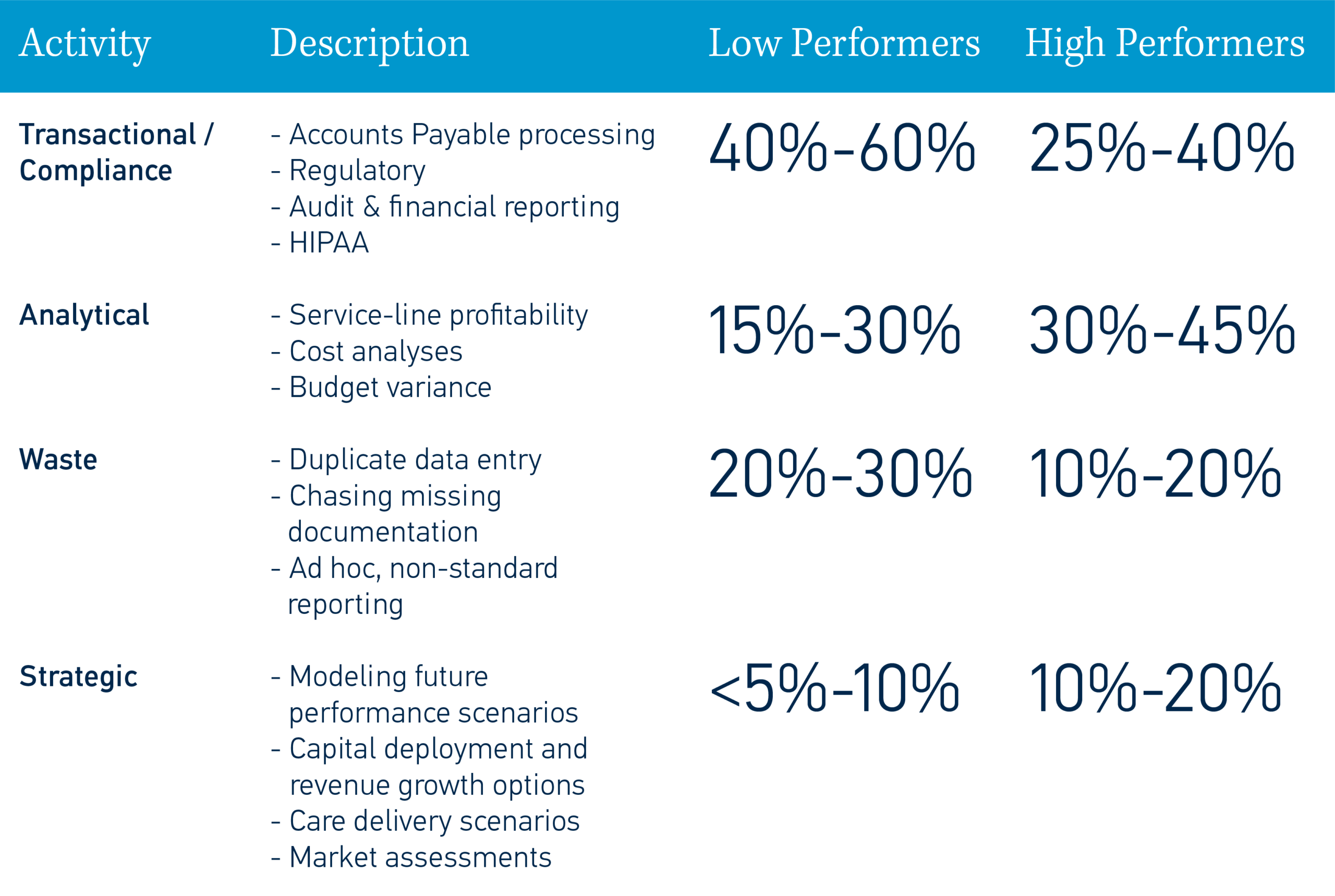
To redesign the future state of finance, organizations first must understand how teams operate today—and where they should reprioritize their time and capacity.
How to Assess Healthcare Finance Time Allocation and Efficiency
Start with the basics: stakeholder interviews, workshops, and a review of core process measures such as cycle times, error rates, rework, and close performance. These methods surface what the organization believes is happening.
Opinion alone, however, is rarely enough. A tremendous amount of operational evidence already exists inside enterprise systems. Using modern process-mining and digital analysis tools, BRG reconstructs transactional activity across record-to-report, procure-to-pay, and revenue-cycle processes to show how work actually flows. A data-driven view typically unlocks four insights:
- a unified picture of activity across finance, operational, and clinical systems
- transaction-level visibility into delays, exceptions, and manual intervention
- benchmarking against external metrics such as throughput, staffing ratios, automation levels, and time-to-close
- a quantified view of “value leakage” translated into cost, speed, and quality opportunities—so leaders can prioritize by impact and feasibility
This combined BRG Finance Capacity Diagnostic pairs leader and team perspectives with system-level transactional evidence to produce a defensible, quantified view of where finance time is spent today and where it should be redirected.
How to Redesign the Finance Operating Model for Value
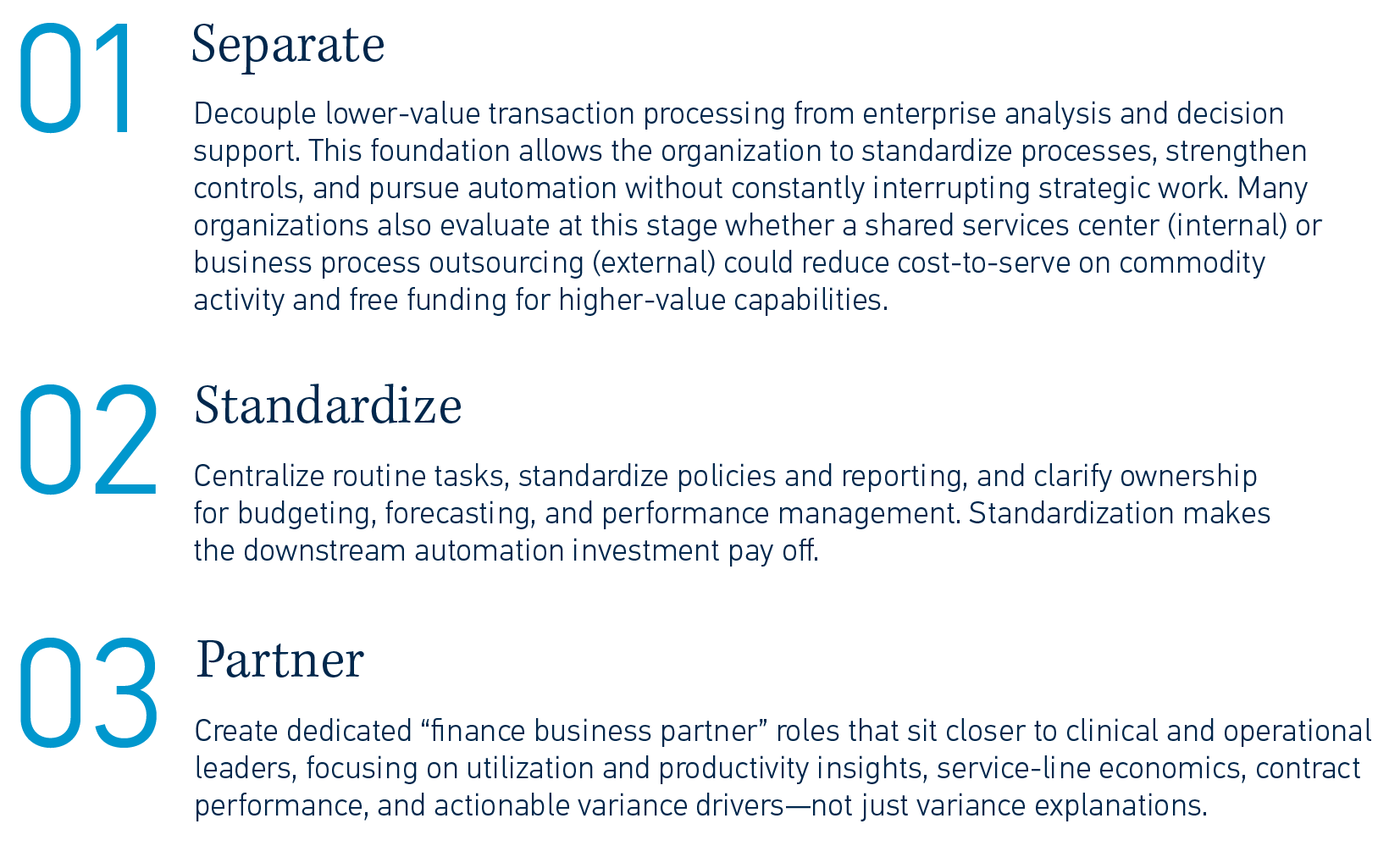
Once leaders know which work truly adds value—and where time is being lost—they can reshape the operating model around three sequential moves: Separate, Standardize, and Partner.
Enablers, Measurement, and How to Sustain the Shift
Sustained improvement depends on three enablers working together:
- Technology and automation. AI-enabled tools reduce manual touches in billing, payroll, reconciliations, and reporting, redirecting capacity toward analysis. Healthcare-specific revenue-cycle automation deployments have been reported to deliver materially less manual work and faster reimbursement cycle times. This shift to automation is projected to reduce cost-to-collect by 30 to 60 percent.
- Data quality. Trustworthy cost, volume, and quality data must move across systems without extensive manual reconciliation. Technology investments without underlying data discipline will not deliver value.
- Capabilities. Investment in analytics, cost accounting, and change management helps finance support operations with insight, not just information.
To keep the organization honest about progress, define a focused set of metrics and review them consistently with functional leadership. A practical starting set:
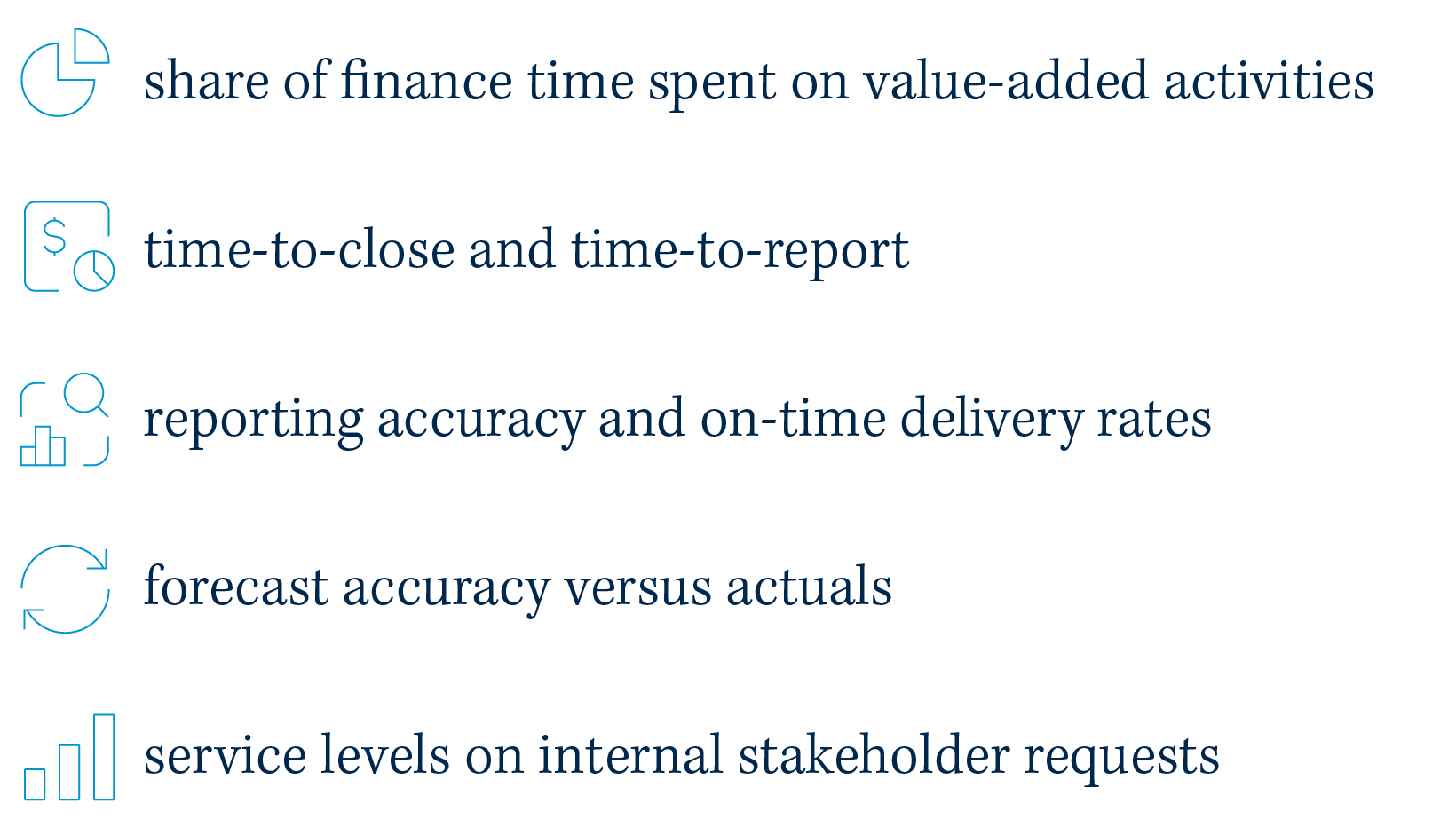
A practical operating rhythm pairs a semiannual time-use reassessment with an ongoing process-improvement pipeline so capacity gains are identified, captured, and redeployed continuously rather than as a one-time event.
The Stakes
Margin compression and M&A complexity will not ease in the near term—both demand a finance function that can do more than close the books. Providers that move now to free finance from transactional volume and reorient capacity toward strategic decision support will position themselves measurably better to defend margins, integrate acquisitions, and convert data into action.
BRG partners with healthcare providers across the full arc of this shift: diagnosing where finance time is actually spent, designing an operating model that separates processing from partnering, evaluating shared-services and third-party options, and driving adoption of automation. The result: a finance organization that has moved beyond transactional volume to become a genuine engine for enterprise performance.







Prepare for what's next.
ThinkSet magazine, a BRG publication, provides nuanced, multifaceted thinking and expert guidance that help today’s business leaders adopt a more strategic, long-term mindset to prepare for what’s next.