
Brace for Impact: How Construction Teams Can Stay Ahead of Tariff Uncertainties, Supply Chain Disruption, and Potential Disputes

A Q&A with BRG construction experts on managing tariff impacts on construction costs, emerging disputes, and the skilled labor shortage
Midway through 2026, it might seem like the US construction industry is increasingly rife with talk about data centers and related electrical components like “switchgear” and “transformers.”
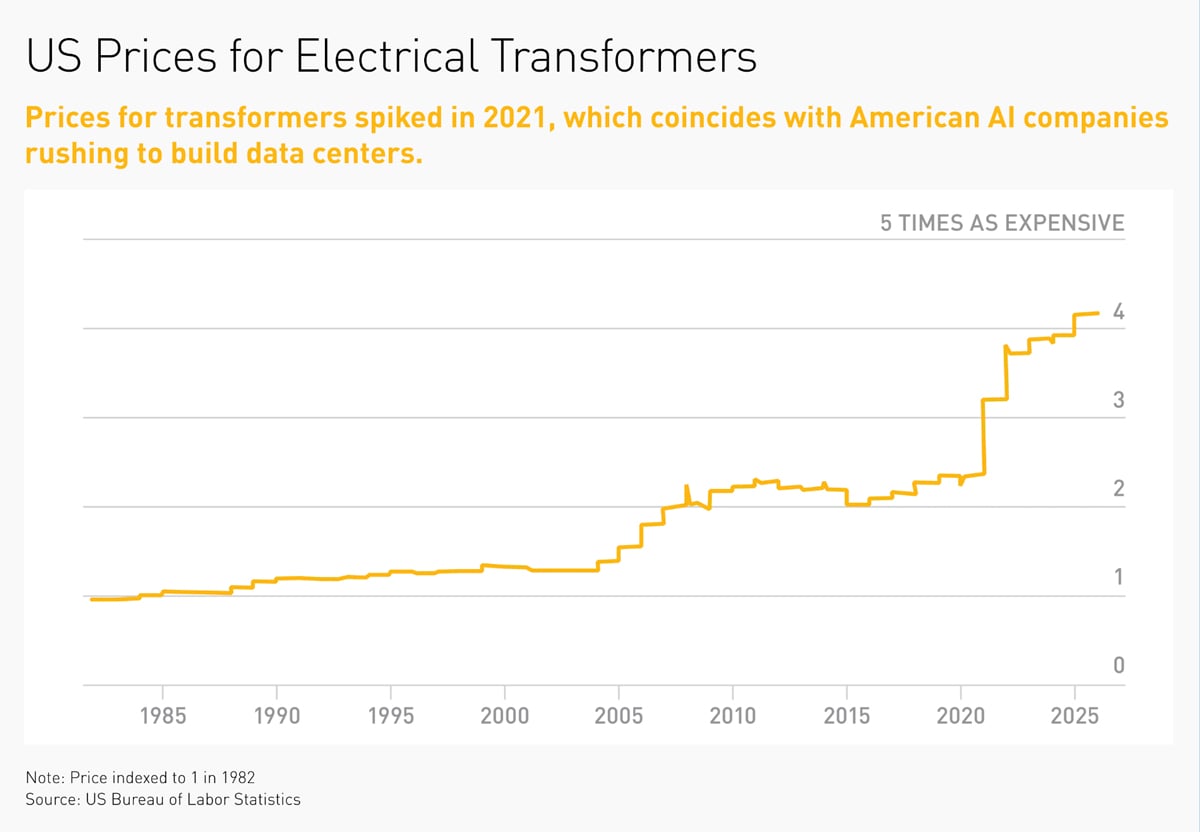
As commercial builders in the US “lose their appetite to build anything but data centers,” supply chain bottlenecks for these and other critical inputs are causing major delays and cost hikes. Only one-third of announced US data centers are actually under construction, while prices for transformers have increased exponentially over time.
Data centers are not the only construction projects experiencing these headwinds. A fast-changing tariff landscape continues to plague project teams—last year, 75 percent of contractors either raised bid prices or passed along costs to owners in response—along with ever-widening labor shortages, stubbornly high interest rates, and mounting oil prices. This past May saw a nearly 10 percent year-over-year increase in construction input prices, including prominent spikes in steel and copper (both of which are needed for transformers).
To learn more, we sat down with three of BRG’s leading construction experts: John Dillon, Caleb Sturm, and Richard Easler. They have helped construction teams navigate supply chain disruptions and construction disputes stemming from COVID-19, the war in Ukraine, widespread skilled-labor shortages, and other turbulent developments.
John, Caleb, and Richard assess the current environment and provide construction executives with vital risk mitigation strategies to prepare for present and future risk, including the next wave of market disruptions.
The big global supply chain story involves a dramatic shift in US trade policies—largely tariffs, which continue to fluctuate significantly. How is the tariff situation impacting US construction teams and their supply chains?
RE: The impact is greater for manufacturing—where every little widget crosses a border—but it can cause unexpected price spikes, limit availability of certain materials, and complicate modes of construction.
For instance, owners who rely on prefabricated parts—where major components are made overseas and then brought onshore for installation—could be hit hard. Alternative options include nearshoring that fabrication, building modules on site, or shifting design specifications or vendors, but each can create additional complexity.
Unfortunately, tariff rate changes have no pattern and are unpredictable from week to week. Construction companies, particularly those handling larger projects, must be more flexible about how they procure materials. For example, they can increase use of short-term contracts to shift quickly to another supplier or line up multiple vendors to create redundancies.
We also expect that delays and scoping issues related to these challenges will lead to an uptick in disputes.
What else should construction executives be thinking about in relation to contracts and disputes?
CS: It all starts with the contract: if a dispute comes up, everybody looks there first to find the relevant provisions.
Given the uncertainty right now, a lot of parties are essentially saying: We’re dealing with things none of us anticipated when we originally structured these agreements, so let’s get ahead of it. This means drafting contracts in anticipation of unexpected changes; when risk appears on a project, they can address it under the contract and applicable provision rather than try to figure it out outside the agreement.
Stakeholders should consider how tariff costs are passed through and to whom; how overall allocation of risk is structured across parties under the contract; and how force majeure, escalation, and notice provisions are defined and triggered. The goal is to be explicit about how risk is distributed across the contract and what the process looks like when that risk shows up.
Have project teams gotten out ahead of this given their experiences during the pandemic?
JD: From my experience, some teams are going out and procuring long-lead equipment way earlier than they used to. In a sense, they’re betting on themselves and obtaining components for projects they may not even have yet. This didn’t happen as often before COVID.
It’s an understandable strategy but a big risk: you don’t want to spend millions of dollars on one hundred widgets and only use half of them.
A recent report shows that disagreements over changes in scope continue to be the top cause of construction disputes, but that payment and cash-flow disputes are on the rise due to a softer economic climate and supply chain hurdles. What types of disputes are you seeing—or do you anticipate seeing—as a result of this volatility?
RE: We’re seeing a significant uptick in escalation claims. We deal with a lot of schedule delay matters, and the costs being claimed historically have been more traditional—such as productivity losses. But now a larger component is material or labor escalation. Even the difference between planning to do something this year versus last year can be enormous because of fluctuating commodity prices and labor rates. A tariff imposed on top of that compounds everything.
JD: Traditionally, escalation has been the contractor’s risk. But now some situations are so extreme that we may see legal teams argue that something falls under a force majeure situation. An escalation this exotic starts to shift the conversation from a contract administration issue to a legal one.

What can project teams do to get ahead of potential claims and disputes or better position themselves should a dispute eventually arise?
CS: Documentation is key so one can make sound comparisons between what was planned and what happened. Adhere to the contract and follow the process. More broadly, remember basic construction project best practices: strong communication, collaboration, planning, tracking, and monitoring—particularly for long-lead items or projects that are international or managed remotely—go a long way in preventing disputes.
RE: Part of effective documentation involves thoroughly identifying potential risks at the outset. Contractors should consider procurement-pertinent provisions—bulk material costs or labor rates—they typically wouldn’t think about. Most are worried about their bid and what’s in their proposal; once it’s accepted, they just sign it and go. Identifying these things early will make it easier to state your case for cost or time impact later.
Are people missing any trends or blind spots having to do with construction supply chains ?
JD: Skilled labor remains a pressing issue. Industries like power and energy are growing substantially, and the labor market sometimes has trouble keeping pace.
Take nuclear. It’s been around for a long time but essentially went on hiatus for thirty to forty years with respect to new builds in the US. Now it’s coming back with new plants built recently in Georgia and Tennessee, another being finished in South Carolina, and others on the horizon. The volume of future builds could lead to a shortage of experienced workers. The skilled labor that built the original generation of plants was largely long gone when the recent wave occurred, necessitating ongoing training.
You often must plan for labor the way you plan for long-lead materials. You can’t assume that the unions will supply what you need. You may have to take a more strategic approach: think far ahead, potentially go out and procure your labor directly, and create the necessary skilled labor before you’re in a bind. Successful projects in this environment may treat labor procurement as a core strategic factor.
CS: I have clients who work around the world on projects that often involve creating an entirely new, project-specific supply chain. That’s inherently challenging. Resilient supply chains now call for more than just one supplier with built-in redundancy, which can be particularly difficult if you’re building in a more remote or “new” location. This underscores the necessity for project teams to be continually aware of the viability and potential risk in, and resiliency of, their supply chains.


