How Gen Z Is Shaping Apparel Merchandising—and What Retailers Can Do About It

Gen Z is poised to be the wealthiest consumer group in history. To reach those consumers, retailers must adopt merchandising strategies at the intersection of value, sustainability, and self-expression.
At a Glance
- As Gen Z reshapes apparel trends, retailers must strike the right balance with their assortment strategies.
- While Gen Z consumers say they prioritize sustainability and self-expression, purchase price is still the leading driver in the group’s retail decisions.
- Tiered merchandising strategies, digital-first product curation, seamless omnichannel experiences, and AI-powered personalization can help retailers balance affordability with Gen Z’s stated values.
Generation Z—those born between 1997 and 2012—is reshaping apparel trends as it is poised to become the wealthiest and fastest-growing consumer group in history.
However, Gen Z’s purchasing decisions reveal a tension between stated priorities and actual behaviors. For instance, they place high importance on sustainability but continue to consume fast fashion at high rates. This makes sense: in the wake of COVID-19, Gen Z entered adulthood with more financial burdens than previous generations, leading them to be financially cautious. Current macroeconomic headwinds such as inflation, new tariff threats, and rising student debt exacerbate this trend.
As a result, retailers must increasingly adapt their assortment strategies to meet Gen Z’s tenuous balance of price sensitivity, sustainability, and self-expression. Here’s what retailers need to know.
Understanding Gen Z: Do Purchases Speak Louder Than Words?
Gen Z is a force to be reckoned with. Although 64 percent of Gen Z consumers have changed their spending habits in the past year due to higher living costs, their spending power is still projected to reach $12 trillion—out of $67 trillion global spend—by 2030. This growth reflects a 4 percent compound annual growth rate, twice the pace of Millennials and Gen X when they were the same age.
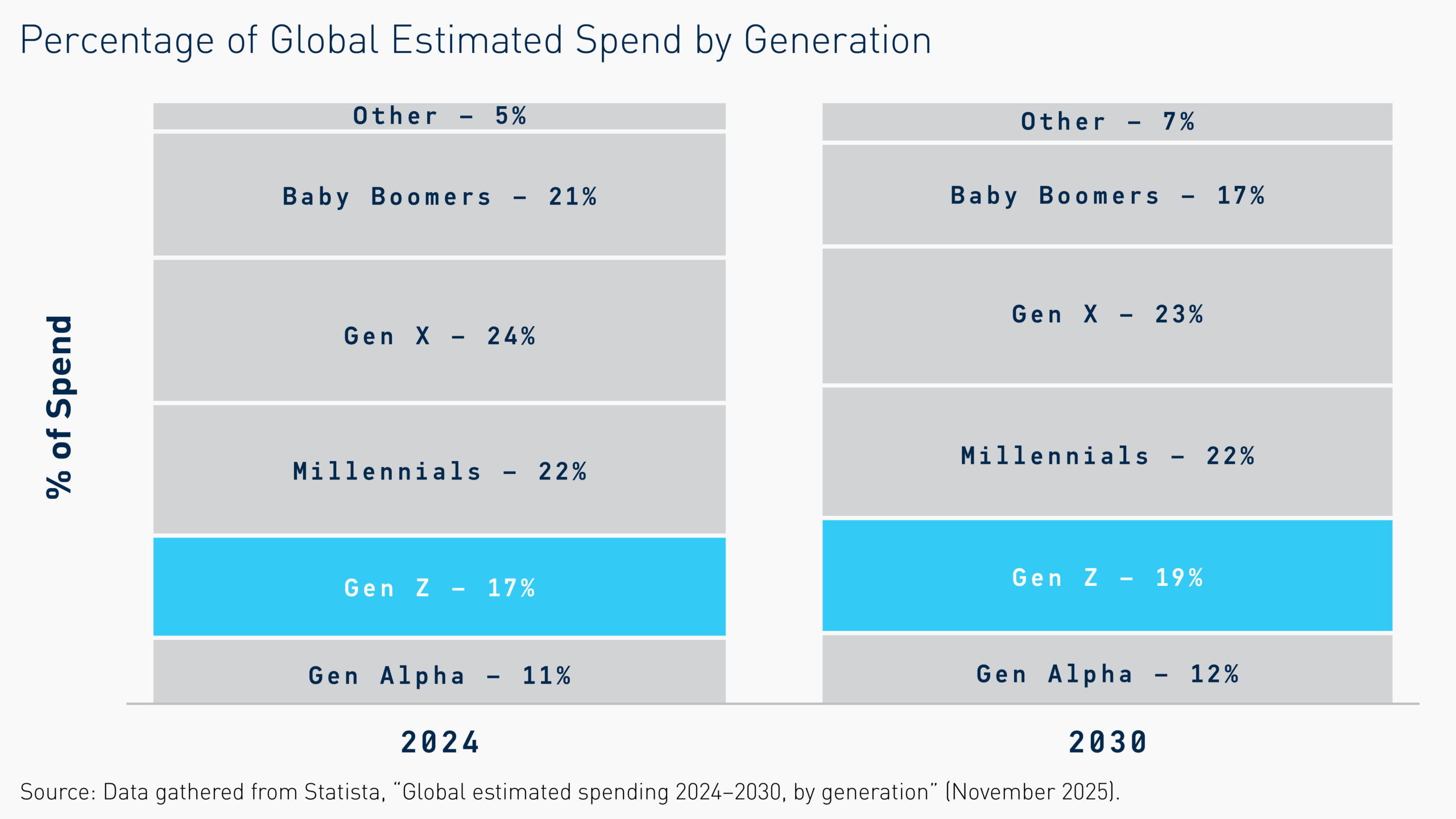
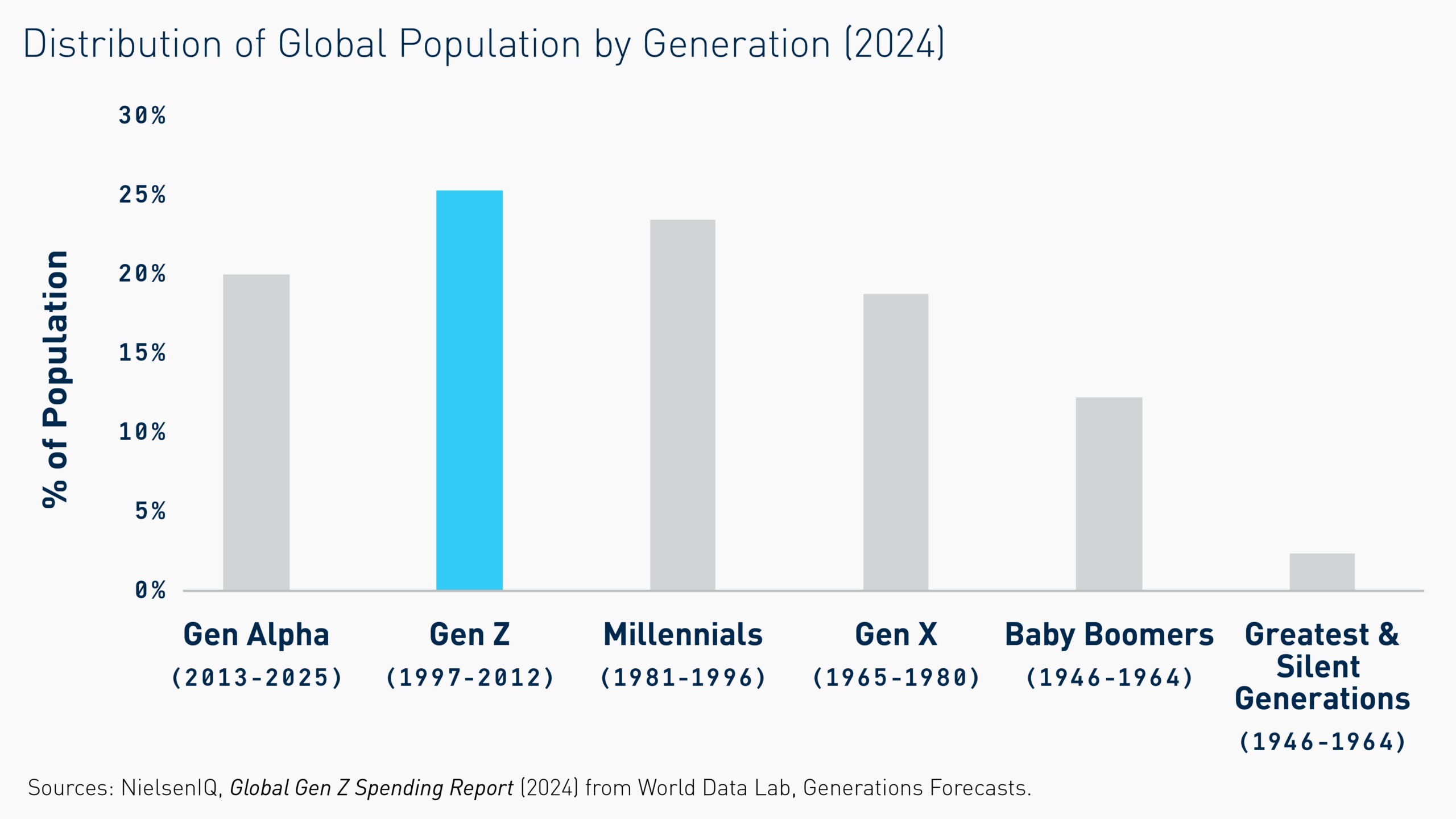
Of this spend, the average Gen Z consumer currently expends $1,675 per year on apparel purchases. While this is lower than older generations (Millennials: $2,434; Gen X: $2,555) due to age and income stage, Gen Z’s financial influence is expanding rapidly for both independent consumers and household purchases. With Gen Z accounting for the largest portion of the global population (nearly 25 percent), it will likely be the first generation to ever reach two billion people. Gen Z’s impact in shaping retailers’ assortments will only grow stronger in the years ahead.
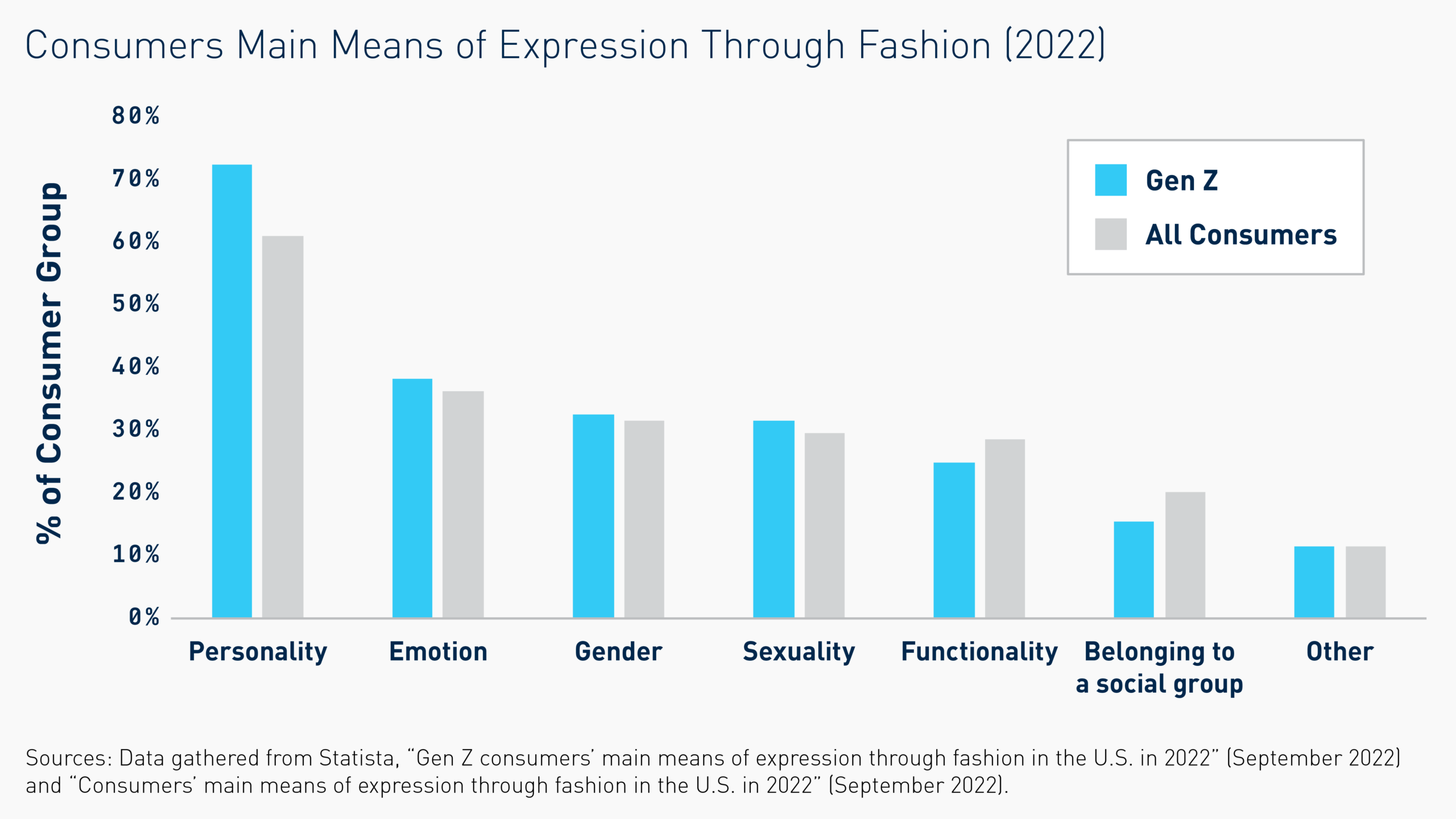
However, Gen Z consumers view shopping not just as a transaction but as a statement of their personal values and beliefs (e.g., sustainability). In the US, 71 percent of Gen Z consumers say fashion is their main means of expressing personality, far higher than consumers overall (59%).
Yet Gen Z’s stated preferences don’t necessarily play out in their purchasing decisions. While 62 percent of Gen Z says they prioritize ecofriendly brands, they are no more willing than previous generations to pay a premium. Other considerations, including trendiness and self-expression, influence decisions—but price is still the primary driver of purchase decisions.
Merchandising at the Intersection of Value and Values
Apparel retailers can attract Gen Z shoppers by balancing affordability with an embrace of the group’s values using the following strategies:
- Build a tiered merchandising strategy that leverages private-label products to deliver on profitability.
Good–better–best and opening price-point strategies have been retail staples for decades, but their relevance will only grow with Gen Z’s evolving preferences and increasing buying power.
For instance, 67 percent of Gen Z shoppers believe private-label products are just as good as national branded products; therefore, retailers have an opportunity to marry their tiering and private-label strategies to increase customer value and profitability. If done correctly, private labels give retailers control over product design, sourcing, and sustainability while enhancing gross margins.
To maximize impact, retailers should:
-
- differentiate tiers clearly, ensuring each level has a distinct value proposition
- infuse trend relevance within the private-label offering to deliver fashion-forward looks at entry-level price points
- showcase sustainability features on packaging, signage, and digital channels to drive awareness of value
- experiment with exclusive products and collaborations within the private-label brand to drive excitement while maintaining profitability
Bottom line: When executed well, combining good–better–best tiering and private-label strategies can build a brand into a trusted and profitable alternative that resonates with Gen Z’s need for both ethical and affordable products.
- Curate product assortments that are trend-right, are visually compelling, and create excitement in short-form videos.
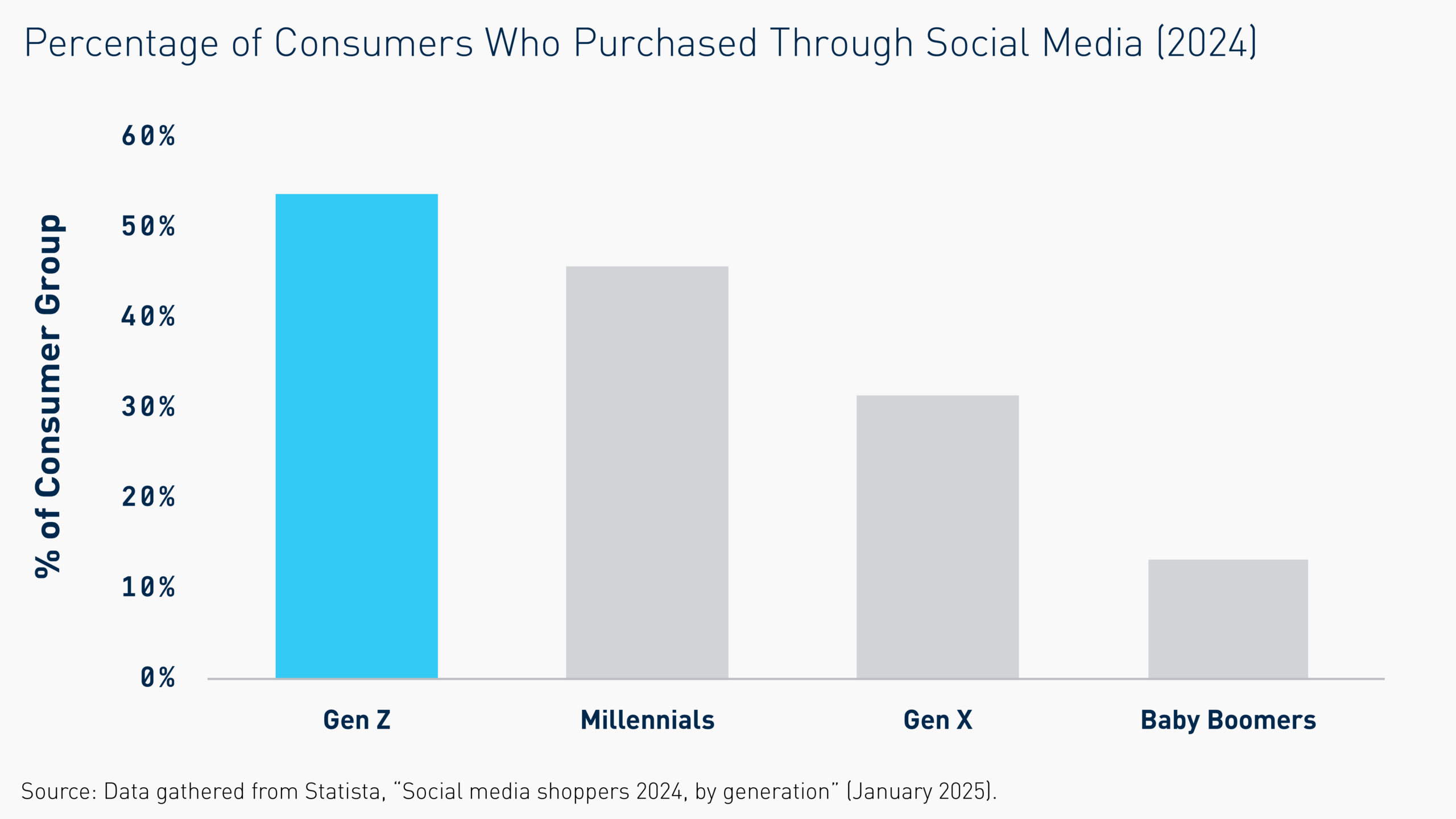
More than half of Gen Z customers made at least one purchase through social media platforms in 2024, and the group now comprises almost 30 percent of total social commerce sales. To take advantage, merchants’ assortments should align with this digital-first mindset.
But price is still the main factor in Gen Z purchasing decisions, so merchants should ensure products can be priced strategically for flash sales and impulse purchases, such as limited-edition drops.
To aid in driving social commerce, merchants should:
-
- include stock keeping units (SKU) that are trend-right and lend themselves to short videos and social media feeds
- create a sense of urgency through flash deals, exclusive products, and time-sensitive product drops to tap into impulse behavior
- use social media to test-and-learn for new products and pricing before rolling out in stores or other channels
Bottom line: Success in social commerce will require merchants to think of products not just as inventory but as content they can use to drive engagement, urgency, and conversion.
- Deliver seamless omnichannel experiences by integrating real-time inventory availability, personalized pricing alerts, and consistent value messaging across channels.
Gen Z consumers are “digital natives” who start their shopping experiences online. However, they prefer in-store shopping for more premium purchases and check inventory availability online before visiting the store.
Showing real-time inventory on websites and apps, as companies like have done in its “Check Nearby Stores” feature, could help drive customers to stores. This transparency will help drive foot traffic while supporting buy online, pick up in store (BOPIS). After all, Gen Z chooses BOPIS around 35 percent of the time, and 85 percent of BOPIS shoppers make additional purchases when collecting orders.
To create a unified omnichannel experience, merchandising teams should:
-
- integrate real-time inventory views both online and in apps to support digital-first research and reduce lost sales
- enable online-only products to be fulfilled in stores, and support flexible pickup options
- align marketing, pricing, and in-store messaging to reinforce value propositions and avoid conflicting information
Bottom line: Ensuring that assortments, inventory visibility, and messaging are aligned across online and offline channels will allow retailers to turn Gen Z’s digital-first browsing into in-store purchases.
- Use personalization to enhance relevance and loyalty while maintaining transparency and trust.
Nearly half of consumers say they are more likely to consider a purchase from a brand that does personalization well. This is particularly important with Gen Z shoppers valuing individuality and self-expression.
BRG’s 2025 AI in Retail report found that 78 percent of retailers implemented artificial intelligence (AI) to help with marketing functions, like targeted campaigns that stress personalization. More than half use the technology in merchandising to drive dynamic pricing, optimize promotions, and improve in-store execution that empowers self-expression. For example, Coach has attracted Gen Z customers by adding interchangeable bag charms and enabling customized purchases without significantly increasing their assortments’ complexity.

To further build personalization into merchandising strategies, retailers can:
-
- offer modular mix-and-match options, such as interchangeable straps or accessories, that allow customers to customize their purchases
- curate capsule collections or limited runs to give a sense of exclusivity and individuality while minimizing needed inventory investment
- leverage in-store merchandising display features that encourage build-your-own looks by styling/bundling products together
Bottom line: Merchandising strategies should structure their assortments to feel flexible, exclusive, and expressive. This will allow customers to feel like curators of their fashion choices—all while ensuring profitability and scalability.
Strategic Priorities for Retailers
As Gen Z reshapes the apparel landscape, merchants must balance affordability, sustainability, trend relevance, and individuality while protecting profits. BRG helps retailers define and execute strategies to meet these shifting expectations through focused work across:
Assortment Strategy
- Redesign good–better–best frameworks and private-label lines to deliver trend-right value.
- Rationalize underperforming SKUs to fund newness and growth categories.
Social Commerce and Pricing
- Develop assortments and promotions fit for social platforms.
- Use dynamic pricing to drive engagement without eroding margin.
Omnichannel
- Align inventory, fulfillment, and messaging across channels to create a seamless shopping experience.
- Benchmark best-in-class models.
Personalization
- Use AI to tailor recommendations, pricing, and engagement at scale.
- Design assortments to feel curated and flexible for self-expression.
Marketing and Customer Engagement
- Optimize digital spend and loyalty programs through data-led insights.
BRG brings deep expertise, analytics, strategy, and execution support to help retailers modernize merchandising and win the Gen Z customer.
Related Professionals



Prepare for what's next.
ThinkSet magazine, a BRG publication, provides nuanced, multifaceted thinking and expert guidance that help today’s business leaders adopt a more strategic, long-term mindset to prepare for what’s next.