Delinquency Rates in Argentine Banks and Mitigating Strategies

Argentina’s banking system has experienced a sharp increase in delinquency over the past year, particularly within the household segment.
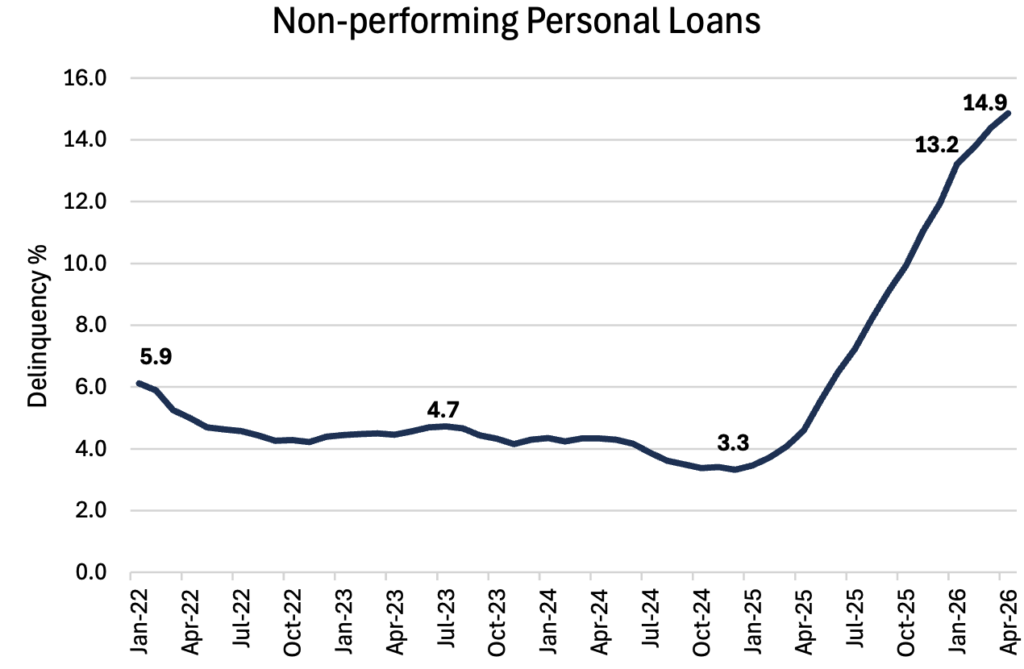
A clear indication of this trend is seen in personal loan delinquencies, which reached 14.9% in April 2026.
Figure 1.
This development reflects factors that have weakened borrowers’ repayment capacity and contributed to current conditions.
Causes of the Change
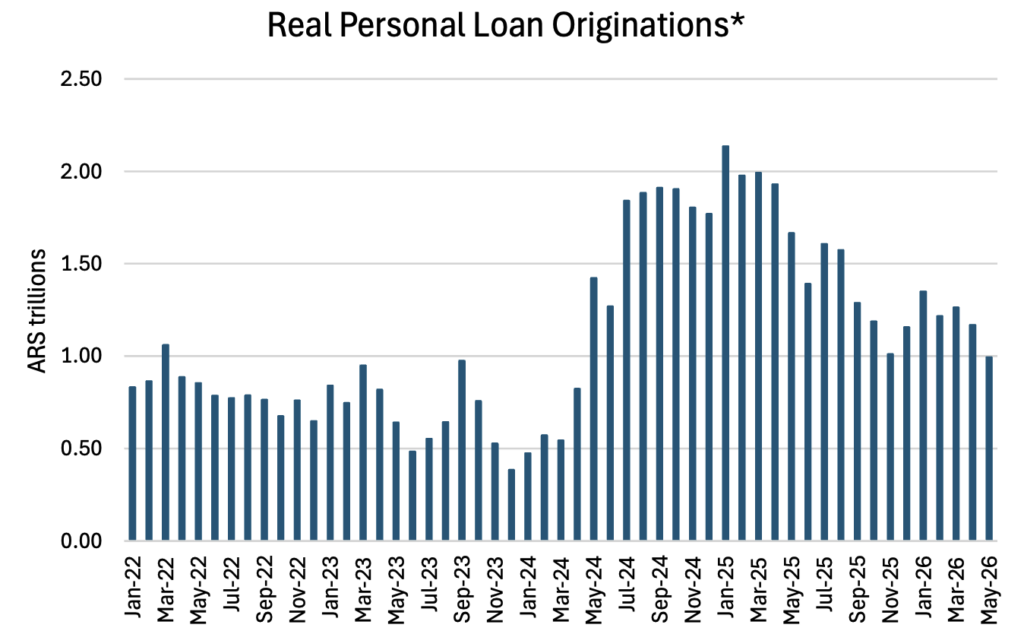
Between 2022 and 2023, credit demand in Argentina declined in real terms. A high inflation environment and banks’ large positions in government debt did not provide sufficient incentives to increase personal loan originations.
Figure 2.
Personal loans’ (the largest credit segment for individuals) monthly originations remained broadly stable around ARS 0.7 trillion per month throughout 2022. This changed in 2023, when accelerating inflation led to a gradual decline in real loan originations.
Figure 3.
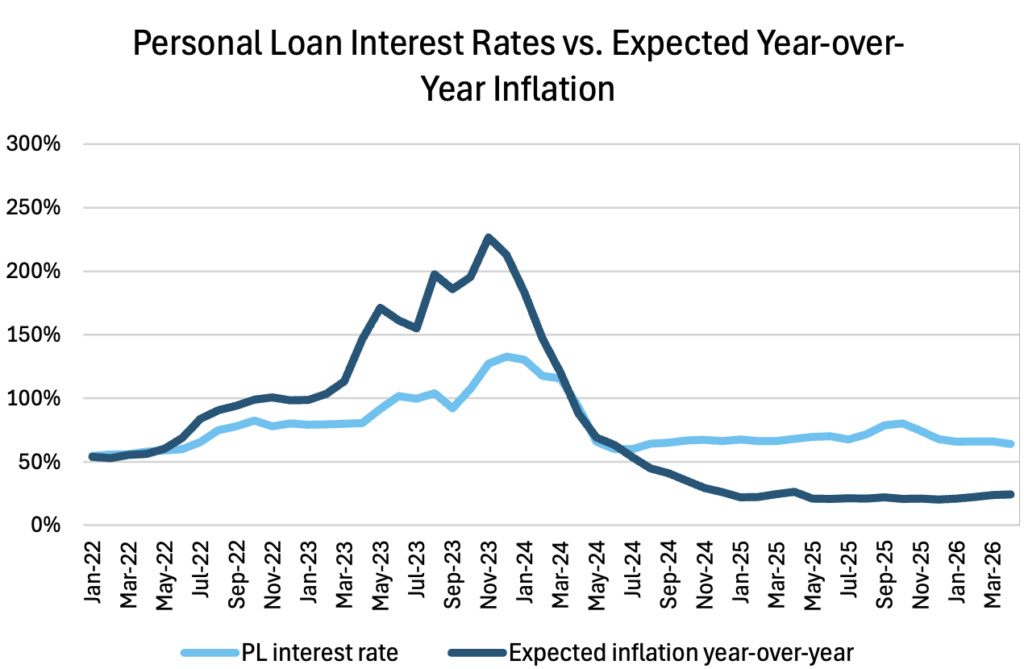
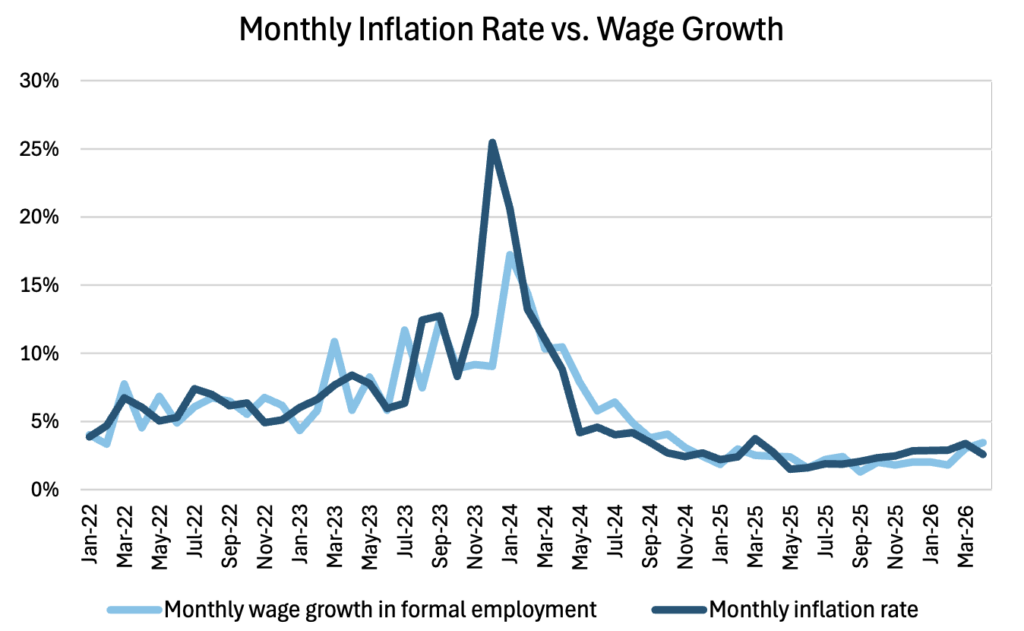
During the first months of 2024, declining interest rates triggered a notable rebound in credit demand. This was driven primarily by individuals in the formal labor market, whose wages adjusted broadly in line with inflation. Given that personal loans are primarily fixed‑rate and follow a French amortization system, borrowers experience a decline in their debt-to-income (DTI) ratio over time. In effect, the real burden of loan installments diminishes over the life of the loan, even in scenarios where wage growth only partially keeps pace with inflation.
Figure 4.
Under traditional credit risk perspectives, longer‑term loans generally are associated with higher risk due to potential interest rate fluctuations. Under these conditions, the opposite effect emerged.
A Shift in Dynamics
Prior to mid‑2024, borrowers followed this dynamic: accessing personal loans at relatively high nominal interest rates, while inflation progressively eroded the real burden of repayments. A different pattern began to emerge after mid‑2024.
As disinflation took hold, personal loan interest rates did not decline in tandem with inflation. Instead, rates stabilized while inflation continued to decline. This became more pronounced in 2025, when interest rates remained elevated, consistent with monetary policy objectives, while wage dynamics weakened and no longer kept pace with inflation.
This shift produced two effects that contributed to rising delinquency:
- New loan originations at high interest rates, which can traditionally lead to adverse selection in credit origination
- Deterioration in loans originated months earlier, as borrowers began to face increasing repayment pressure
Figure 5 assumes a loan principal held constant in real (inflation‑adjusted) terms, along with constant real wages, a standard twelve-month maturity, and the prevailing personal loan interest rates at each point in time.
Figure 5.
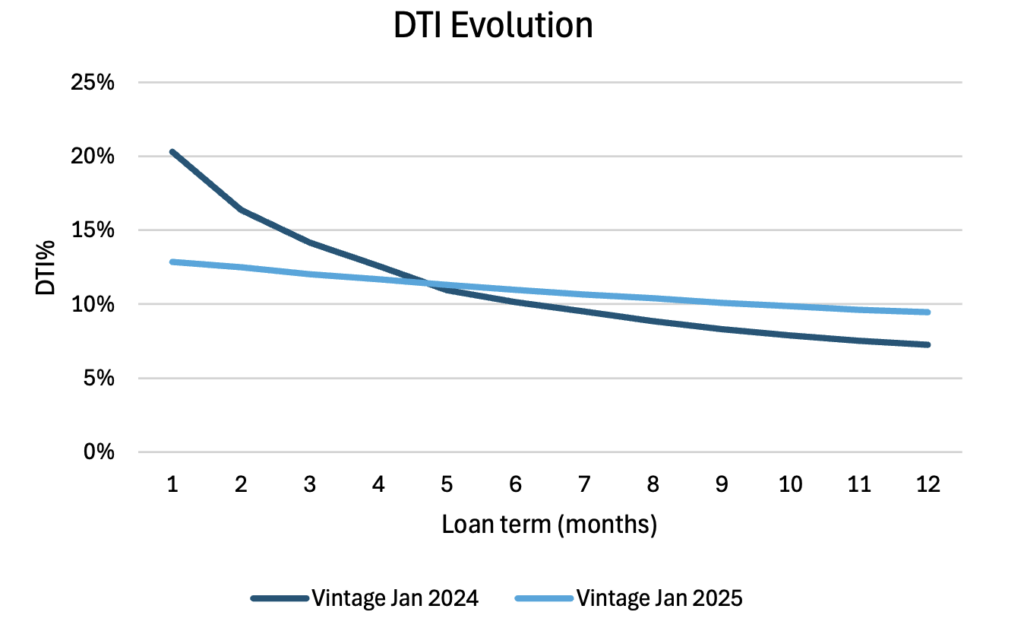
Even with declining interest rates between 2024 and 2025, the impact of lower inflation on DTI dynamics became the dominant factor influencing repayment burden over the life of the loan.
Paradoxically, declining inflation weakened borrowers’ capacity to meet future loan payments, as installment values were no longer “eroded” in real terms.
From a risk management perspective, this phenomenon introduces both vintage‑ and portfolio‑level stress. Vintage stress results from higher delinquency in new originations amid challenging macroeconomic conditions and high interest rates. Portfolio stress reflects rising delinquency in previously originated loans as DTIs stop declining over time and borrowers face an elevated repayment burden.
These effects compounded, leading to a steady and accelerating increase in delinquency throughout late 2025, ultimately reaching 14.9% in April 2026.
Is There a Way Forward?
Encouraging credit growth while effectively managing risk in high‑inflation economies is inherently challenging. This balance requires a proactive and disciplined approach to credit portfolio management to ensure resilience amid macroeconomic volatility.
Banks should adopt strategies that address new loan originations through improved customer segmentation and robust income assessment, including data not captured by traditional methods. They also should implement proactive collections strategies capable of identifying early warning signs of delinquency.
These actions within a dual-portfolio management framework can help strengthen credit portfolios against changing macroeconomic and regulatory environments, enabling early intervention when signs of deterioration emerge.
How Can BRG Help?
BRG brings extensive expertise in risk management, process improvement, and risk management system optimization. We work with organizations of all sizes to help navigate complex and evolving environments.
Our services include in-depth risk analysis across key areas such as credit risk, model risk, internal controls, and enterprise-wide risk assessments, helping institutions build more resilient and adaptive risk management frameworks.
BRG supports banks in identifying emerging credit risks and optimizing portfolio performance through targeted risk assessments and data-driven portfolio strategies including:
- Conducting forward-looking credit risk assessments, including vintage and portfolio stress analysis
- Optimizing portfolio composition through segmentation, pricing, and risk-based origination strategies
- Enhancing underwriting frameworks using alternative data and improved income verification methodologies
- Designing and implementing early warning systems and proactive collections strategies
- Supporting end-to-end portfolio monitoring, including performance analytics and risk reporting enhancements
Related Professionals



Prepare for what's next.
ThinkSet magazine, a BRG publication, provides nuanced, multifaceted thinking and expert guidance that help today’s business leaders adopt a more strategic, long-term mindset to prepare for what’s next.